
Introduction
Payday arrives.
Within a few days, the money is gone.
Some of it went to transportation. Some paid for food. A little was used to settle old debts. Then there were unexpected expenses, subscriptions, impulse purchases, and one or two “I’ll replace it next month” decisions.
Before the month reaches the halfway point, the account balance is almost empty.
For many young people, this cycle repeats every month.
The problem is not always that they earn too little.
Sometimes, they simply have no plan for the money they earn.
Financial management is one of the most important life skills a young person can develop, yet it is one of the least taught. Schools prepare students to pass examinations, but very few prepare them to manage a salary, save for emergencies, avoid debt, or build wealth.
As a result, many young adults enter the working world knowing how to earn money but not how to manage it.
The good news is that financial wisdom is a skill, not a talent.
It can be learned.
And the earlier you learn it, the greater your chances of building a stable and secure future.
Why Financial Management Matters More Than Ever
The world has become more expensive.
The cost of food, transportation, housing, education, healthcare, and daily living continues to rise in many countries. For young people just starting their careers or businesses, this creates significant financial pressure.
According to the World Bank, rising living costs continue to affect households across many developing economies, making financial planning increasingly important for young adults.
At the same time, social media often encourages a lifestyle that appears expensive.
People post luxury vacations, designer clothes, new gadgets, expensive restaurants, and successful businesses.
What is rarely shown is the debt behind those lifestyles or the years of disciplined saving that made them possible.
Many young people begin spending to impress people instead of spending according to their priorities.
That decision often delays financial freedom.
The Biggest Financial Mistake Young People Make
One of the greatest misconceptions about money is believing that financial success begins when you earn more.
In reality, it begins when you learn to manage what you already have.
There are people who earn large salaries and remain constantly in debt.
There are others with modest incomes who gradually build savings, invest wisely, and enjoy financial peace.
Income matters.
But habits matter even more.
Money is less about mathematics and more about behaviour.
The way you think about money often determines what happens to it.
A Story Many Young People Will Recognize
Imagine two friends who graduate from university and secure similar jobs.
Both earn the same salary.
The first person spends immediately after receiving payment.
They buy new clothes every month, upgrade their phone before the old one stops working, eat out frequently, and rarely keep track of expenses.
By the third week of every month, they begin borrowing from friends.
The second person lives differently.
Before spending anything, they set aside money for savings.
They create a simple budget.
They distinguish between needs and wants.
They avoid unnecessary debt.
They invest in learning new skills that could increase their income.
Five years later, both individuals have earned almost the same amount of money.
Yet one is constantly struggling financially, while the other has built savings, invested in personal growth, and enjoys greater financial stability.
The difference was not income.
It was financial discipline.
Understanding the Difference Between Needs and Wants
One of the simplest ways to improve your finances is learning the difference between a need and a want.
A need is something essential for your wellbeing or responsibilities.
Food.
Shelter.
Transportation to work.
Healthcare.
Education.
A want is something that improves comfort or enjoyment but is not immediately necessary.
The latest phone.
Expensive fashion.
Frequent online shopping.
Luxury dining.
Entertainment subscriptions you rarely use.
There is nothing wrong with enjoying life.
The problem comes when wants consistently replace priorities.
Wise financial decisions often begin by asking one simple question.
“Do I need this now, or do I simply want it?”
Why Every Young Person Needs a Budget
Many people avoid budgeting because they think it limits their freedom.
The opposite is true.
A budget gives your money direction.
Without one, money often disappears without explanation.
Budgeting does not require complicated spreadsheets.
It simply means deciding where your money should go before it arrives.
When you know how much you plan to spend on transportation, food, savings, learning, family responsibilities, and personal needs, you gain greater control over your finances.
A budget is not about restriction.
It is about intention.
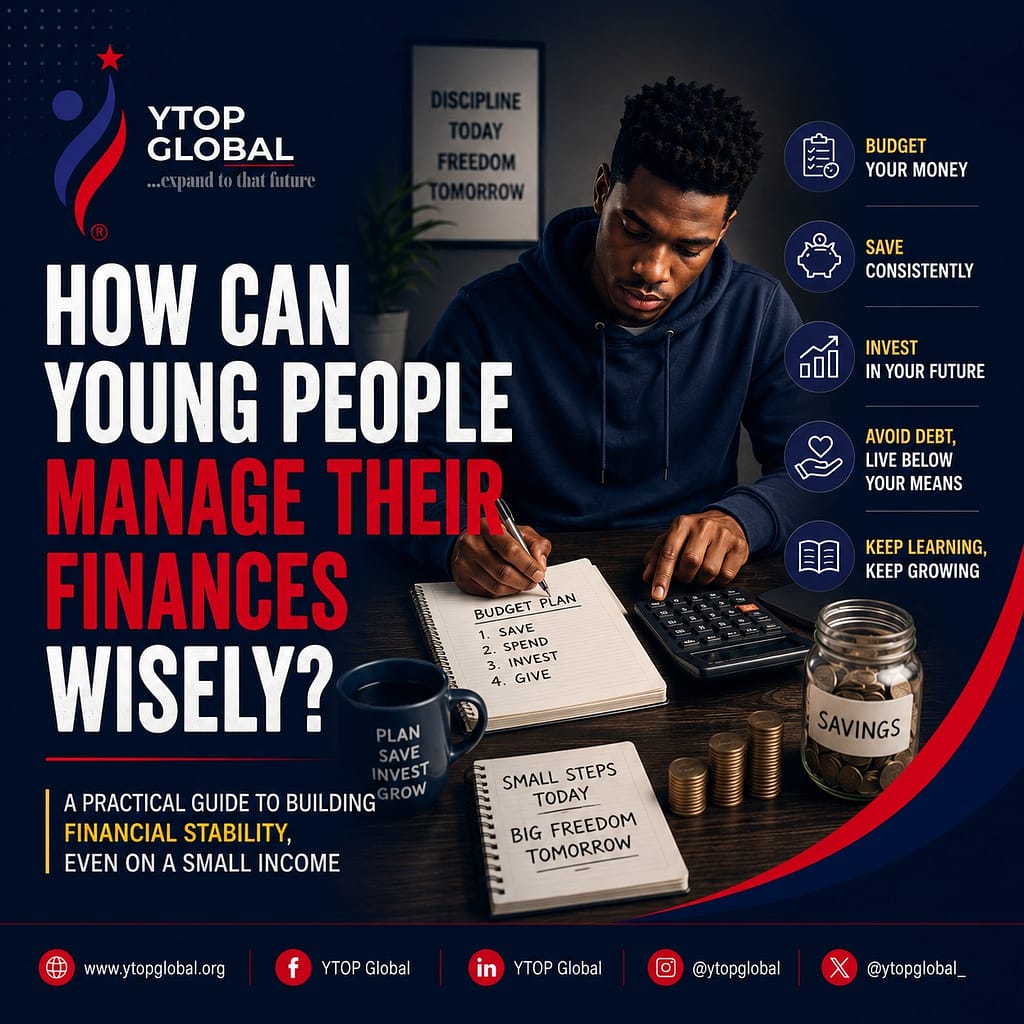
Build the Habit of Saving Before Spending
Many people save whatever remains after spending.
Unfortunately, very little usually remains.
Financially disciplined people often do the opposite.
They save first.
Then they adjust their spending around what is left.
Even if your income is small, developing the habit of saving teaches discipline.
The amount matters less than the consistency.
Saving is not only about preparing for emergencies.
It is also about creating opportunities.
The money you save today may help you pay for a professional certification, start a small business, relocate for a better opportunity, or support your family during difficult times.
Small savings create future possibilities.
Debt Is Easy to Enter but Difficult to Leave
Not all debt is harmful.
Some loans can help people invest in education, housing, or productive businesses.
The danger lies in borrowing to maintain a lifestyle you cannot afford.
Many young people accumulate debt trying to look successful instead of becoming financially stable.
Buying expensive items on credit simply to impress others often creates unnecessary pressure.
Financial freedom is rarely built through appearances.
It is built through wise decisions repeated consistently.
Invest in Yourself Before Chasing Luxury
One of the best uses of money is investing in your own development.
A new skill may increase your income for years.
A professional certification may open career opportunities.
Books may change the way you think.
Training programs may introduce you to valuable networks.
These investments often produce returns far greater than temporary purchases.
Before buying something expensive, ask yourself,
“Will this increase my value, or only my image?”
The answer may change your financial future.
Financial Freedom Is Built One Decision at a Time
Many young people believe wealth comes from one big breakthrough.
Sometimes it does.
More often, it grows through small daily decisions.
Choosing to cook instead of eating out every day.
Saving consistently.
Avoiding unnecessary debt.
Tracking expenses.
Learning new income generating skills.
Investing wisely.
Over time, these ordinary habits create extraordinary financial stability.
There is rarely a single moment when someone suddenly becomes financially responsible.
It happens gradually.
One decision at a time.
Reflect on These Questions
Take a moment to think honestly about your financial habits.
Do you know exactly where your money goes every month?
Are your spending habits helping or delaying your future goals?
If your income doubled tomorrow, would your financial habits improve, or would your spending simply increase?
What one financial habit could you begin this week that your future self would thank you for?
The answers may reveal that financial growth starts long before your income changes.
Final Thoughts
Managing money is not about becoming rich overnight.
It is about becoming responsible.
The financial decisions you make in your twenties often shape the opportunities available in your thirties and beyond.
You do not need a high income to begin building good financial habits.
You need awareness.
Discipline.
Patience.
And the willingness to make choices that support your future instead of only satisfying today’s desires.
Remember, money is a tool.
When managed wisely, it creates opportunities, reduces unnecessary stress, and allows you to focus on fulfilling your purpose.
Do not wait until you earn more before learning to manage money.
Start with what you have.
Because financial freedom is not built by how much you earn.
It is built by how wisely you manage what you earn.
At YTOP Global, we believe financial literacy is an essential part of youth empowerment. Through our leadership development programs, mentorship initiatives, career readiness training, and capacity-building opportunities, we equip young people with practical life skills that help them make informed financial decisions, build sustainable careers, and create lasting impact in their communities. Because empowering young people also means helping them build a secure financial future.
At YTOP Global, we believe young people deserve honesty, encouragement, and support, not pressure to figure life out overnight.