
Introduction
Not every young person grows up in a peaceful home.
Some grew up where shouting was normal.
Others grew up where love was rarely expressed.
Some experienced constant criticism instead of encouragement.
Others watched their parents separate, struggled with neglect, or carried responsibilities far beyond their age.
Many people leave home physically.
Very few leave emotionally.
The wounds often travel with them.
They show up in friendships.
In romantic relationships.
In marriages.
At work.
In leadership.
Even in how they see themselves.
You may not realize it, but many of the fears, habits, and reactions you struggle with today were shaped long before you became an adult.
The good news is this.
Your past may explain your pain, but it does not have to determine your future.
Healing is possible.
Healthy relationships are possible.
And breaking unhealthy family patterns begins with one decision.
Choosing growth over repetition.
Family Shapes Us More Than We Realize
Our first understanding of love usually comes from family.
Our first experience of trust begins at home.
The way conflict was handled.
The way affection was expressed.
The way mistakes were corrected.
The way people communicated.
All these experiences quietly shape our understanding of relationships.
If you grew up in a home where people listened to one another, you may naturally communicate openly.
If you grew up where anger solved every disagreement, you may struggle to express emotions calmly.
If you constantly felt rejected, you may become afraid of abandonment even in healthy relationships.
These patterns are not signs of weakness.
They are learned behaviours.
And what is learned can also be unlearned.
The Hidden Impact of Childhood Experiences
Research consistently shows that childhood experiences influence emotional wellbeing well into adulthood.
The landmark Adverse Childhood Experiences (ACE) Study, conducted by the Centers for Disease Control and Prevention and Kaiser Permanente, found that experiences such as abuse, neglect, domestic violence, or growing up in highly dysfunctional households can have lasting effects on mental health, physical health, and relationships later in life.
This does not mean your future is predetermined.
It means your experiences matter.
Recognizing their influence is often the first step toward healing.
A Story Many Young Nigerians Will Recognize
Imagine a young man who grew up in a home where emotions were never discussed.
Whenever problems arose, everyone remained silent.
As an adult, he finds relationships difficult.
Whenever conflict appears, he withdraws.
His partner interprets the silence as rejection.
He believes he is avoiding problems.
In reality, he is repeating what he learned growing up.
Now imagine a young woman who spent her childhood trying to earn affection through perfect behaviour.
As an adult, she constantly fears disappointing people.
She struggles to say no.
She feels guilty whenever she prioritizes her own wellbeing.
Again, she is not choosing these habits consciously.
She is repeating patterns she learned years ago.
Many adults are living with childhood survival strategies that no longer serve them.
Healing begins when we recognize those patterns.
Healing Is Not About Blaming
When people begin exploring family wounds, they sometimes become trapped in blame.
Healing is different.
Healing acknowledges pain without becoming imprisoned by it.
Your parents may have made mistakes.
They may also have carried wounds of their own.
Many people parent from what they experienced rather than from what they wished they had received.
Understanding this does not excuse harmful behaviour.
It simply reminds us that pain often travels through generations until someone chooses to stop it.
That person can be you.
Breaking the Cycle Requires Courage
One of the greatest acts of courage is refusing to repeat unhealthy patterns.
Perhaps anger has existed in your family for generations.
You can choose emotional maturity.
Perhaps dishonesty became normal.
You can choose integrity.
Perhaps communication was always filled with insults.
You can choose respect.
Perhaps forgiveness was never practiced.
You can choose grace.
Breaking the cycle is not pretending the past never happened.
It is deciding that the pain ends with you.
Future generations should inherit your healing, not your wounds.
Healing Is a Journey, Not an Event
Many people expect healing to happen overnight.
Real healing usually happens gradually.
It takes honest reflection.
Healthy conversations.
Prayer.
Wise mentorship.
Sometimes professional counselling.
It also requires patience with yourself.
You may still have difficult days.
Certain situations may still trigger painful memories.
Progress does not mean perfection.
It means becoming healthier than you were yesterday.
Small changes practiced consistently create lasting transformation.
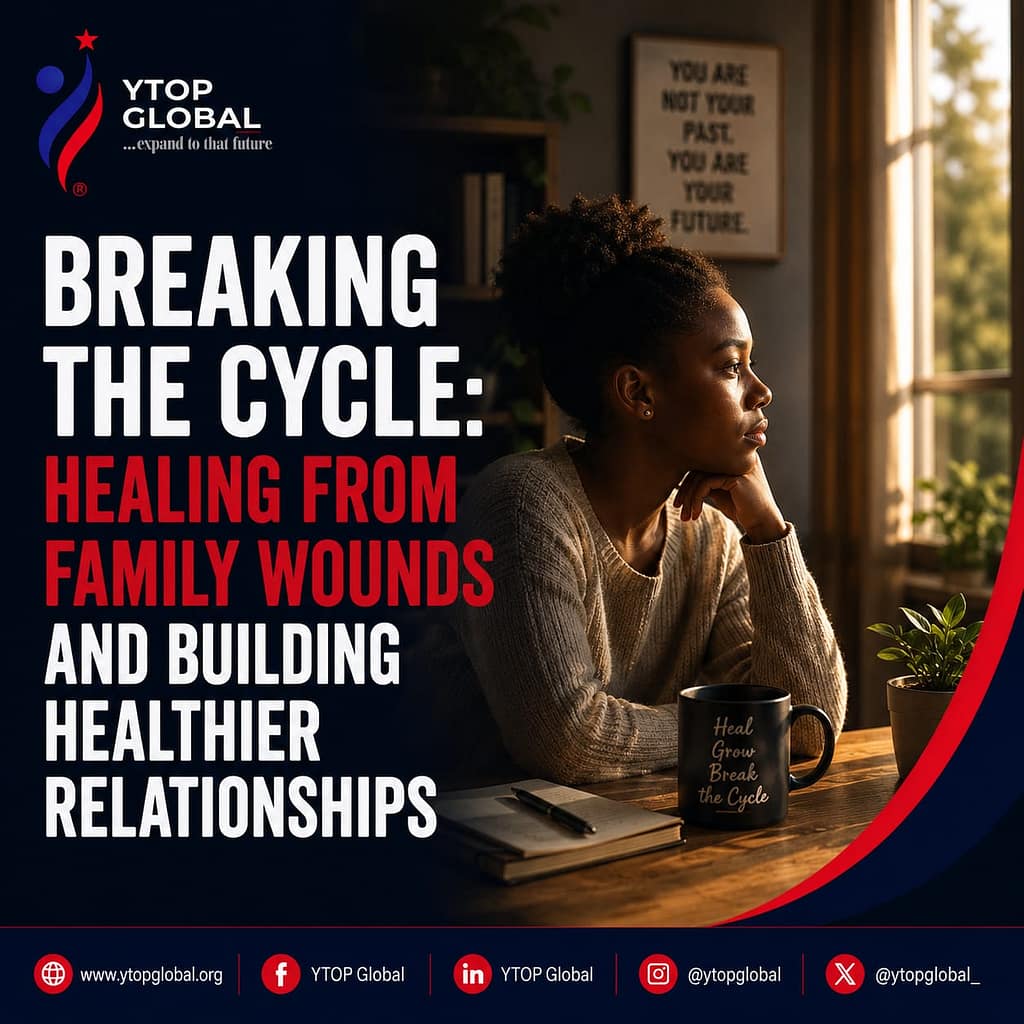
Building Healthier Relationships
Healthy relationships do not happen automatically.
They are built intentionally.
They require honesty.
Respect.
Healthy boundaries.
Forgiveness.
Accountability.
Good communication.
Most importantly, they require emotionally healthy people.
You cannot build healthy relationships while refusing to confront unhealthy patterns within yourself.
Personal growth and relationship growth always go together.
God’s Heart for Healing
The Bible never ignores human pain.
Throughout Scripture, God repeatedly reveals Himself as One who restores, comforts, and heals.
Many biblical figures experienced family conflict.
Joseph was betrayed by his brothers.
David experienced painful family struggles.
Ruth endured deep personal loss before experiencing restoration.
Despite their wounds, God continued writing beautiful stories through their lives.
One of the greatest truths of the Christian faith is that our identity is not determined by the family we came from.
It is transformed through the family we belong to in Christ.
God specializes in restoring what life has broken.
Healing may take time.
But hope always remains.
What Healing Looks Like
Healing is not pretending painful memories no longer exist.
Healing looks like responding differently.
It means learning to communicate instead of shutting down.
Choosing forgiveness without ignoring wisdom.
Setting healthy boundaries without becoming bitter.
Learning to trust again after disappointment.
Receiving love without constantly expecting rejection.
Allowing God’s truth to shape your identity instead of allowing your wounds to define it.
Healing does not erase the past.
It changes your relationship with it.
Reflect on These Questions
Take a quiet moment and ask yourself honestly.
What unhealthy patterns have I carried from my family into my own relationships?
Are my reactions shaped by today’s reality or yesterday’s pain?
Is there someone I need to forgive, including myself?
What kind of family culture do I want future generations to experience because of the choices I make today?
These questions are not easy.
But they often become the beginning of freedom.
Final Thoughts
None of us chooses the family we are born into.
But all of us have choices about the people we become.
You are not responsible for every wound you received.
You are responsible for what you do with them.
You can continue repeating unhealthy patterns.
Or you can begin creating healthier ones.
Healing does not make the past disappear.
It prevents the past from controlling your future.
As you grow, remember this.
Your story is bigger than your pain.
Your identity is greater than your wounds.
And your future is not limited by the difficulties you experienced growing up.
With God’s help, wise relationships, and a commitment to personal growth, you can become the person who changes the direction of an entire family tree.
Sometimes the greatest legacy you leave is not wealth.
It is healing.
At YTOP Global, we believe that strong communities begin with emotionally healthy people. Through mentorship, leadership development, youth empowerment, and supportive communities, we encourage young people to heal, grow, and build relationships marked by integrity, empathy, and respect. We are committed to raising a generation that breaks unhealthy cycles and creates families, workplaces, and communities where people can truly thrive.
At YTOP Global, we believe young people deserve honesty, encouragement, and support, not pressure to figure life out overnight.