
Introduction
Many young people dream of becoming leaders.
They want to lead organisations.
Manage successful businesses.
Influence communities.
Inspire change.
There is nothing wrong with these ambitions.
The problem is that many people misunderstand how leadership develops.
They believe leadership begins when someone gives them a title.
A manager.
A director.
A president.
A founder.
Real leadership starts much earlier.
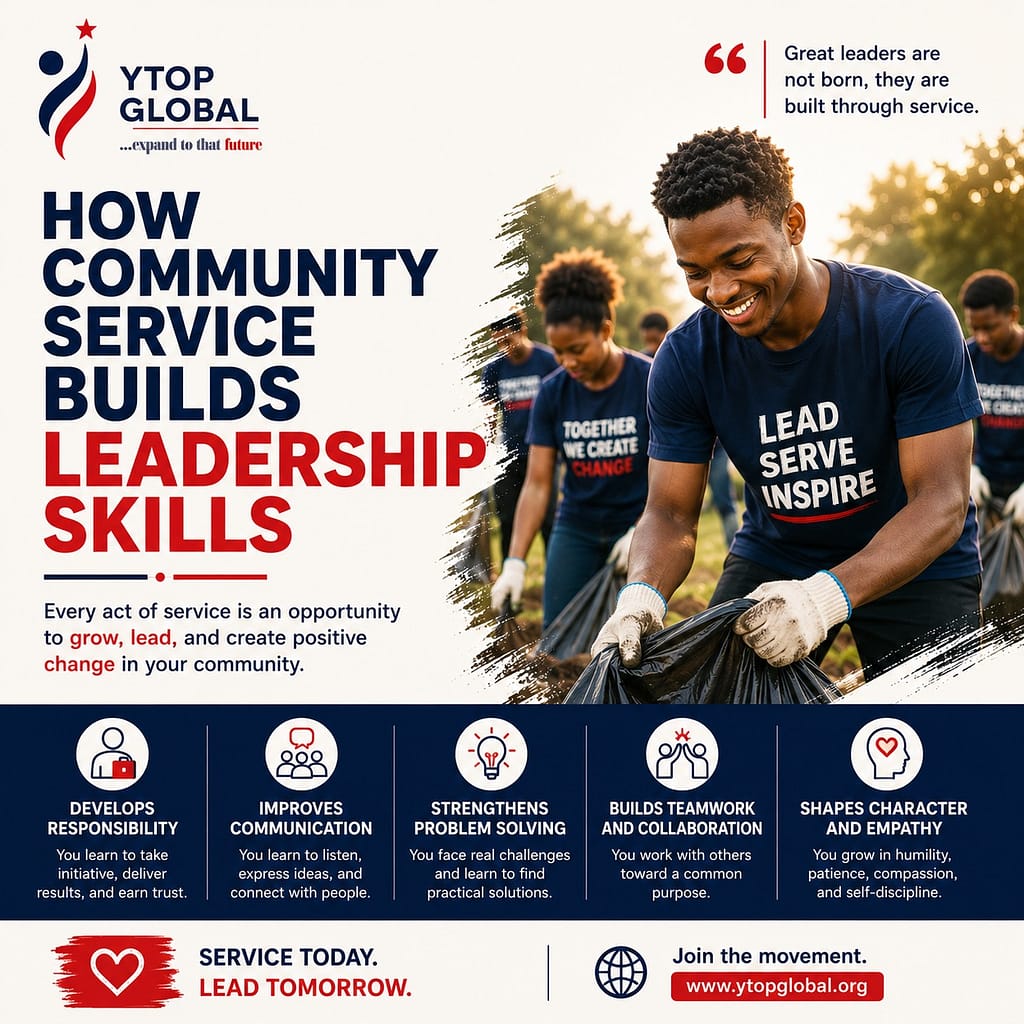
It begins when you choose to serve.
Community service is often seen as something people do to help others.
While that is true, it also shapes the person doing the serving.
It teaches lessons that no classroom can fully explain.
The truth is simple.
If you want to become a better leader tomorrow, start serving people today.
Leadership Is More Than Authority
Many people confuse leadership with power.
They believe leaders are simply people who give instructions.
The best leaders do something different.
They listen.
They encourage.
They solve problems.
They support others.
They accept responsibility when things go wrong.
Community service creates opportunities to practise these habits long before you receive a leadership position.
Leadership is not about being in charge.
It is about creating positive change.
A Story Many Young People Will Recognize
Imagine two university students.
One spends four years focused only on academic work.
The other also studies hard but volunteers every weekend with a community organisation.
They organise outreach programmes.
Coordinate volunteers.
Communicate with local leaders.
Solve unexpected problems.
Manage limited resources.
After graduation, both apply for leadership roles.
Who is likely to feel more prepared?
The second student has already experienced real leadership.
Not because someone gave them a title.
Because service gave them responsibility.
Leadership grows through experience.
Community Service Teaches Responsibility
When people depend on you, your mindset changes.
You begin showing up on time.
Keeping your promises.
Planning carefully.
Thinking ahead.
Following through on commitments.
These habits become part of your character.
Reliable people naturally earn trust.
Trust is the foundation of leadership.
People follow leaders they believe they can depend on.
You Learn How to Work With Different People
Every community is different.
During community service, you meet people from different backgrounds.
Different ages.
Different cultures.
Different professions.
Different beliefs.
Learning how to communicate respectfully with diverse people is one of the most valuable leadership skills you can develop.
Leadership is impossible without relationships.
Community service strengthens both.
You Learn to Solve Real Problems
Leadership is not about having all the answers.
It is about helping people find solutions.
Community projects rarely go exactly as planned.
Budgets change.
Volunteers arrive late.
Weather interrupts activities.
Unexpected challenges appear.
These experiences teach flexibility.
Creativity.
Decision-making.
Calmness under pressure.
Every problem you solve increases your leadership capacity.
Service Develops Emotional Intelligence
Successful leaders understand people.
They listen carefully.
Recognise emotions.
Show empathy.
Resolve conflicts.
Encourage teams.
Community service naturally develops emotional intelligence because it places you close to real human needs.
You begin to understand struggles that statistics alone cannot explain.
Compassion makes leadership stronger.
You Learn That Leadership Is Teamwork
No meaningful community project succeeds because of one person.
Volunteers collaborate.
Local partners contribute.
Communities participate.
Resources are shared.
Leadership is about helping people work together toward a common goal.
Community service teaches collaboration naturally.
You realise that leadership is less about personal recognition and more about collective impact.
Employers Notice Leadership Experience
Leadership skills are valuable in every profession.
Employers want people who can communicate well.
Work with teams.
Take initiative.
Solve problems.
Adapt to challenges.
According to the World Economic Forum, leadership, communication, collaboration, analytical thinking, and resilience continue to rank among the skills employers value most.
Community service provides practical opportunities to develop these qualities before entering the workplace.
Leadership Is Built Through Consistency
One successful event does not make someone a leader.
Leadership develops through repeated acts of responsibility.
Showing up consistently.
Serving faithfully.
Learning continuously.
Supporting others.
Growing through challenges.
Community service gives you many opportunities to practise these habits.
The more consistently you serve, the more naturally leadership develops.
Faith Shows That Great Leaders Serve
The greatest example of leadership in the Bible is Jesus.
Although He had authority, He consistently served people.
He healed.
He taught.
He encouraged.
He sacrificed.
In Mark 10:43-45, Jesus taught that whoever wants to become great must become a servant.
That principle challenges many modern ideas about leadership.
Greatness is not measured by how many people serve you.
It is measured by how many people become better because of your service.
Reflect on These Questions
Take a few moments to think honestly.
When was the last time I served my community?
What leadership skills have I developed through helping others?
Do I want leadership because of influence or because I genuinely want to make a difference?
How can I begin serving more intentionally this month?
Leadership grows through action, not intention alone.
Final Thoughts
Community service is much more than volunteering.
It is leadership training.
Every project teaches responsibility.
Every challenge develops resilience.
Every conversation improves communication.
Every act of service strengthens your character.
If you want to become a leader people trust, begin by becoming someone who serves consistently.
Titles may open doors.
Character keeps them open.
Leadership is not something you suddenly become.
It is something you develop one act of service at a time.
At YTOP Global, we believe leadership is learned through service. Through community projects, mentorship, volunteer programmes, leadership development initiatives, and youth empowerment activities, we provide young people with practical opportunities to develop the skills, character, and confidence needed to become leaders who create lasting impact.
At YTOP Global, we believe every act of service is an opportunity to develop the next generation of responsible and compassionate leaders.
Frequently Asked Questions
How does community service develop leadership skills?
Community service teaches responsibility, communication, teamwork, problem-solving, emotional intelligence, and decision-making through real-life experiences.
Can volunteering make me a better leader?
Yes. Volunteering gives you practical opportunities to lead projects, collaborate with others, solve problems, and serve people, all of which strengthen leadership ability.
Why is service important in leadership?
Service helps leaders understand people's needs, build trust, develop empathy, and focus on creating value instead of seeking recognition.
Do employers value community service experience?
Yes. Many employers value volunteer experience because it demonstrates leadership, initiative, teamwork, communication, adaptability, and responsibility.
Where can young people gain leadership experience through service?
Young people can volunteer with community organisations, schools, faith-based groups, environmental initiatives, youth organisations, health campaigns, and nonprofit organisations.
How does community service develop leadership skills?