
Introduction
Have you ever looked at someone who just got promoted and wondered,
“Why them?”
You know they are hardworking.
But so are many other people.
You know they are qualified.
But others have the same qualifications.
Sometimes it can feel confusing.
Many young professionals believe promotions happen because someone has worked longer, earned another degree, or simply got lucky.
Those things can help.
But they are rarely the whole story.
In most organisations, promotions are not only about what you know.
They are about the value you consistently create.
Employers promote people they trust with greater responsibility.
That trust is built through habits that often go unnoticed.
These are the hidden skills that quietly separate average employees from future leaders.
The encouraging news is this.
Most of these skills are not natural talents. They are daily habits that anyone can develop.
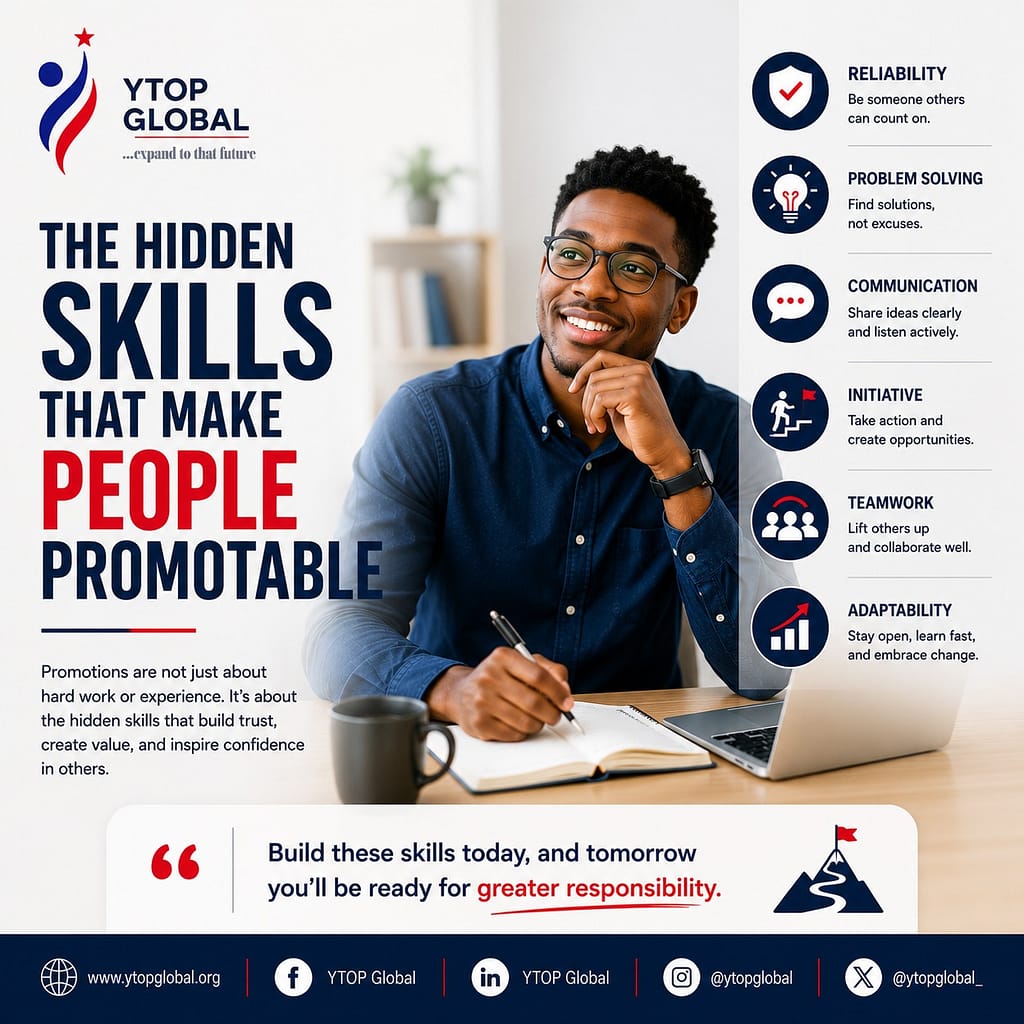
Promotion Begins Before the Position Exists
Many people wait until they receive a promotion before acting like leaders.
Successful professionals do the opposite.
They take ownership before they receive the title.
They solve problems without being asked.
They support colleagues.
They improve processes.
They make life easier for their managers.
By the time a promotion becomes available, everyone already sees them as ready.
Leadership is usually recognised before it is rewarded.
Reliability Builds Trust
Imagine you have two employees.
The first is talented but often misses deadlines.
The second is not the smartest person on the team, but they always deliver what they promise.
Who would you trust with greater responsibility?
Most managers would choose the reliable employee.
Reliability is one of the most underrated career skills.
When people know they can depend on you, they begin giving you bigger opportunities.
Trust grows through consistency.
People Who Solve Problems Become Valuable
Every organisation has problems.
Some employees complain about them.
Others wait for instructions.
A few people look for solutions.
Those people become difficult to replace.
Managers notice employees who think beyond their job descriptions.
Instead of saying,
“There is a problem.”
They ask,
“How can we fix it?”
Problem-solvers become leaders because organisations need people who reduce problems, not increase them.
Emotional Maturity Matters More Than You Think
Workplaces are filled with pressure.
Deadlines.
Different personalities.
Unexpected changes.
Conflict.
The people who earn promotions are often those who remain calm during difficult situations.
They do not panic.
They do not spread negativity.
They manage disagreement professionally.
They control their emotions instead of allowing emotions to control them.
Emotional maturity builds confidence.
Managers trust emotionally stable people with greater responsibility.
Communication Creates Influence
Great ideas have little value if nobody understands them.
Promotable employees communicate clearly.
They write professional emails.
They explain complex ideas simply.
They listen before speaking.
They ask thoughtful questions.
They speak respectfully even during disagreement.
Communication is not only about speaking.
It is about helping other people succeed through clarity.
The better you communicate, the greater your influence becomes.
Initiative Gets Attention
Many employees complete only the tasks assigned to them.
Promotable employees look beyond their job descriptions.
They identify opportunities for improvement.
They volunteer for projects.
They offer ideas.
They take responsibility.
Initiative tells managers something important.
“This person can be trusted without constant supervision.”
That quality is rare.
And valuable.
You Must Learn to Work With People
No matter how talented you are, success rarely happens alone.
Organisations promote people who improve teams.
Can you collaborate?
Can you support colleagues?
Can you resolve disagreements professionally?
Can people enjoy working with you?
Technical skills help you perform your job.
Relationship skills help you grow your career.
People remember how you make them feel.
That influences opportunities more than many realise.
Adaptability Is the New Competitive Advantage
The workplace changes constantly.
Technology evolves.
Customer expectations change.
Artificial intelligence is reshaping industries.
According to the World Economic Forum, adaptability, resilience, analytical thinking, and continuous learning are among the most valuable skills for the future workforce.
Employees who resist change often struggle to grow.
Those who embrace learning continue creating value.
The willingness to adapt may become one of your greatest career advantages.
Build Influence, Not Just Expertise
Some people become experts.
Others become trusted advisers.
The difference is influence.
Influential employees help others succeed.
They share knowledge.
They mentor newer colleagues.
They contribute ideas during meetings.
They earn respect through service, not position.
People naturally recommend those they trust.
Influence often leads to promotion long before another qualification does.
Character Is Your Long-Term Reputation
Your manager notices more than your performance.
They notice your attitude.
Your honesty.
Your humility.
Your response to pressure.
Your willingness to admit mistakes.
Your respect for others.
Character becomes your professional reputation.
A promotion gives someone more authority.
Managers want to know that authority will be used responsibly.
That confidence begins with character.
Learn the Business, Not Only Your Job
Many employees understand only the tasks assigned to them.
Future leaders understand the organisation.
How does the company make money?
Who are the customers?
What challenges does the business face?
How does your work contribute to larger goals?
Employees who understand the bigger picture make better decisions.
Managers notice this.
Leadership requires perspective.
Reflect on These Questions
Take a few minutes to think honestly.
If my manager resigned tomorrow, would they trust me with greater responsibility?
Do I solve more problems than I create?
Am I known for reliability or excuses?
What hidden skill should I intentionally develop this year?
Small improvements today often become major opportunities tomorrow.
Final Thoughts
Promotions rarely happen because someone worked the longest.
They happen because someone became ready.
Ready through reliability.
Ready through learning.
Ready through communication.
Ready through leadership.
Ready through service.
Do not focus only on earning another certificate.
Also become the kind of professional people naturally trust.
Build your reputation before the opportunity arrives.
Develop the habits that make organisations stronger.
Because when promotion decisions are made, employers rarely ask,
“Who has been here the longest?”
They ask,
“Who is ready for greater responsibility?”
At YTOP Global, we believe leadership is developed long before titles are given. Through mentorship, leadership development programmes, career readiness training, volunteer opportunities, and practical learning experiences, we help young people build the character, confidence, and professional skills that prepare them for long-term career growth.
At YTOP Global, we believe young people deserve honesty, encouragement, and support, not pressure to figure life out overnight.