
Introduction
Landing your first job feels like a major milestone.
After months, or even years, of studying, applying, and attending interviews, someone finally says yes.
You are excited.
You are relieved.
You feel like your career has finally begun.
Then, after a few months, something unexpected happens.
You realize the job is not what you imagined.
Perhaps the work does not excite you.
Maybe you discover new interests.
Perhaps the company culture is not the right fit.
Or you begin to wonder if you chose the wrong career entirely.
Many young professionals panic at this stage.
They believe they have made a mistake that will affect the rest of their lives.
The truth is much more encouraging.
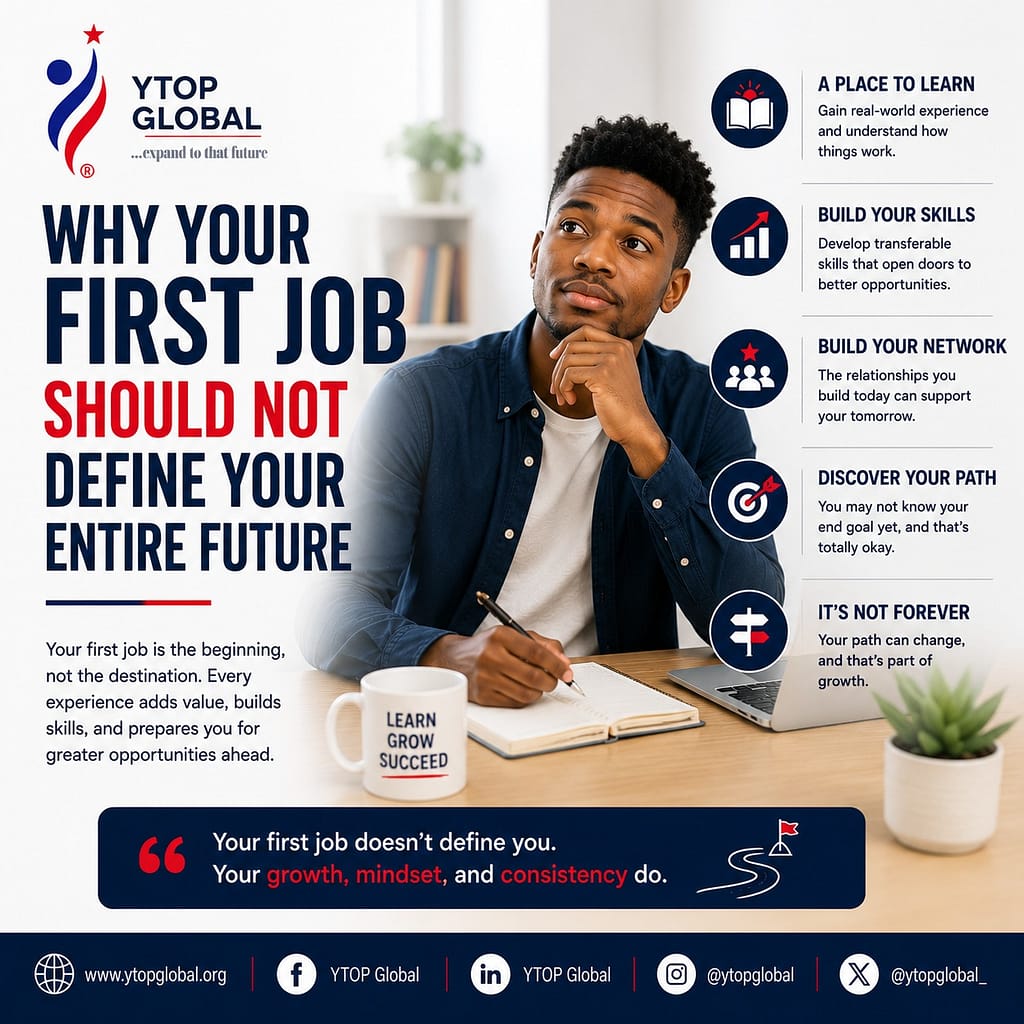
Your first job is meant to teach you, not trap you.
It is the beginning of your career, not the final destination.
Your First Job Is Your First Classroom
University teaches theory.
Your first job teaches reality.
It shows you how organisations operate.
How teams work together.
How to communicate professionally.
How to manage deadlines.
How to receive feedback.
How to solve problems under pressure.
These lessons are valuable regardless of whether you remain in that role for one year or ten.
Even if you eventually change careers, the skills you develop in your first job continue to serve you.
No meaningful experience is wasted.
Many Successful People Changed Direction
One of the biggest myths about careers is that successful people always knew exactly what they wanted to do.
History tells a different story.
Many entrepreneurs started as employees.
Many executives changed industries.
Many professionals discovered their true strengths only after working in different roles.
Career growth is rarely a straight line.
It is often a series of experiences that gradually reveal where you create the greatest value.
Do not judge your future based only on where you begin.
A Story Many Young People Will Recognize
Imagine a graduate who accepts their first role as a customer service officer.
At first, they feel disappointed because it was not their dream job.
Instead of complaining, they decide to learn everything they can.
They improve their communication.
They learn conflict resolution.
They understand customer behaviour.
They develop patience.
After two years, those same skills help them move into marketing.
Later, they become a business development manager.
Looking back, they realise their first job prepared them for opportunities they never expected.
The job was temporary.
The lessons were permanent.
Every Job Teaches Transferable Skills
Many young people focus only on job titles.
Employers often focus on skills.
No matter where you begin, you can develop abilities that remain valuable throughout your career.
Communication.
Problem-solving.
Leadership.
Teamwork.
Customer service.
Project coordination.
Time management.
Professional writing.
Adaptability.
These are called transferable skills because they remain useful across different industries.
The stronger these skills become, the easier it is to change careers when new opportunities arise.
Don’t Compare Your Beginning to Someone Else’s Middle
Social media makes career comparison almost impossible to avoid.
You see someone becoming a manager at twenty-six.
Another person launches a successful business.
Someone else receives an international scholarship.
What you rarely see are the years of preparation behind those achievements.
Everyone begins differently.
Some people find opportunities earlier.
Others take longer.
Success is not measured by who starts first.
It is measured by continuous growth.
Focus on becoming better than you were yesterday.
Learn Everything You Can Where You Are
One mistake many young professionals make is mentally leaving a job before physically leaving it.
They stop learning.
Stop improving.
Stop contributing.
If your current job is honest work, treat it as an opportunity to grow.
Learn from experienced colleagues.
Volunteer for projects.
Ask questions.
Develop new skills.
Build relationships.
The attitude you demonstrate in small responsibilities often determines whether people trust you with bigger ones.
Career Growth Requires Lifelong Learning
The world of work continues to evolve.
New industries emerge.
Technology changes.
Artificial intelligence transforms how organisations operate.
According to the World Economic Forum, continuous learning and adaptability are among the most important qualities for long-term career success.
The professionals who remain valuable are those who continue developing themselves.
Do not stop learning after your first job.
Read.
Take courses.
Earn certifications.
Seek mentors.
Build new skills.
Learning keeps opportunities open.
It Is Okay to Change Direction
Changing careers does not always mean you failed.
Sometimes it means you learned more about yourself.
Perhaps you discovered strengths you never knew you had.
Perhaps your interests changed.
Perhaps new opportunities emerged.
Changing direction should be based on thoughtful reflection, not temporary frustration.
Before making a major career move, ask yourself.
Am I running away from problems?
Or am I moving toward greater purpose and growth?
The answer matters.
Build a Reputation Before You Build a Career
Long before people remember your job title, they remember your character.
Were you dependable?
Did you keep your promises?
Did you respect others?
Did you continue learning?
Did you solve problems?
Did you contribute positively?
Your reputation follows you wherever your career takes you.
Protect it carefully.
Faith Reminds Us That Purpose Is Bigger Than Position
Many people confuse their job with their purpose.
A job is what you do.
Purpose is the impact your life makes.
The Bible shows many people whose assignments changed throughout life.
Moses was raised in a palace, became a shepherd, and later became the leader of Israel.
His different roles prepared him for one purpose.
Likewise, your first job may simply be preparing you for something greater.
Trust that God can use every season of your life.
Even the ones that seem ordinary.
Reflect on These Questions
Take a few minutes to think honestly.
What valuable skills is my current job teaching me?
Am I focused only on my job title, or am I focused on my growth?
If I changed careers tomorrow, what skills would I take with me?
How can I become more valuable before seeking my next opportunity?
Growth begins when you start asking better questions.
Final Thoughts
Your first job matters.
But it does not define the rest of your life.
It is one chapter in a much longer story.
Use it to learn.
Build relationships.
Develop character.
Strengthen your skills.
Serve with excellence.
Stay curious.
Remain teachable.
Keep growing.
Because careers are not built by finding the perfect first job.
They are built by consistently becoming the kind of person who creates value wherever they go.
At YTOP Global, we believe young people should see their first job as a foundation, not a limitation. Through mentorship, leadership development, career readiness programmes, volunteer opportunities, and practical learning experiences, we help young people develop the confidence, skills, and mindset needed to build meaningful careers that continue growing over time.
At YTOP Global, we believe young people deserve honesty, encouragement, and support, not pressure to figure life out overnight.